
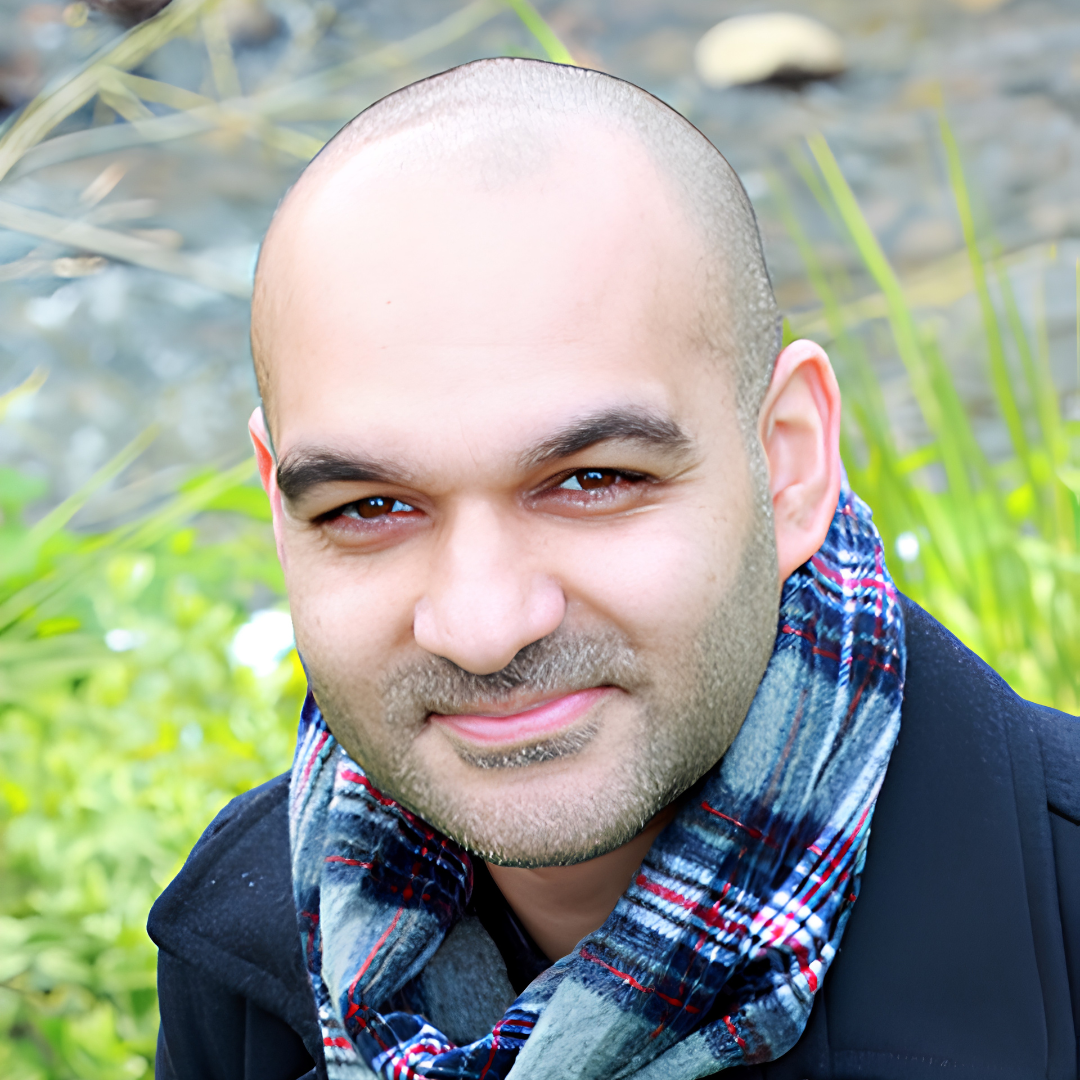
For ALI SA Fellow Kayum Ahmed (Class VII: Dinatla), Rhodes Must Fall was never simply a student protest. It was a movement that challenged deeply held assumptions about liberation, education and power, forcing institutions and individuals alike to confront questions that could no longer be ignored.
Those questions form the foundation of Theorizing Fallism: The Movement to Decolonize the University, Ahmed’s new book. Through archival research and interviews with activists, the book traces the emergence of Rhodes Must Fall and explores how a movement that began at the University of Cape Town grew into a global conversation about colonialism, knowledge and justice.
Beyond the Symbol
Ahmed’s connection to Rhodes Must Fall was both personal and intellectual. Having spent much of his life working on questions of justice as a human rights scholar, activist and educator, he found himself confronted by a question he had not fully answered: what does liberation actually require after formal political transition?
He watched students, many born after apartheid, reject the notion that South Africa’s democratic journey was complete. In his view, they were not merely calling for the removal of a statue. They were exposing how colonialism and apartheid continued to shape institutional cultures, material inequality and the production of knowledge itself.
The decision to write the book came years later while Ahmed was teaching at Columbia University during the student movement for Palestinian liberation. There, he recognised striking parallels between what students at Columbia were articulating and what Rhodes Must Fall had represented in South Africa.
“I realised Rhodes Must Fall was not only a South African story,” he says. “It was one of the defining political and intellectual movements of the twenty-first century and one that had not yet been adequately theorised on its own terms.”
The Human Story Behind the Movement
Public memory often recalls Rhodes Must Fall through images of confrontation, occupations and highly visible acts of protest. Ahmed’s research uncovered a more intimate story.
Over many years of interviews, students spoke of exhaustion, grief, loneliness and the emotional strain of navigating institutions that continued to reproduce exclusion. Many arrived at university carrying the burdens of intergenerational trauma and structural inequality, only to encounter new forms of marginalisation.
One testimony remained with him long after the interview ended. A student described the movement as the first place where they felt “human” inside the university.
For Ahmed, that insight reshaped his understanding of Fallism. It revealed a movement concerned not only with resistance, but also with belonging, collective care and political education.
It also challenged what he sees as one of the most common misconceptions about the movement. While anger played an important role, it was not the sole driving force.
“Underneath it was something far more generative: love, longing, imagination and a refusal to accept diminished futures.”
Being Taught by a Movement
Writing the book was not a detached academic exercise. Ahmed describes it as a process that changed him personally.
Listening to students recount experiences of racism, exclusion, surveillance and violence was often emotionally difficult. Yet what stayed with him most was the creativity with which they responded.
Students transformed pain into study groups, political education, occupations, art, song, mutual care and new ways of imagining liberation. They developed ideas in real time while navigating profound uncertainty.
The experience also prompted Ahmed to reflect on his own generation. Having grown up during apartheid and entered adulthood in democratic South Africa, he had believed institutional reform could be sufficient to create meaningful change.
The students he encountered challenged that belief.
“They asked harder questions about power, colonialism, race, gender, capitalism and the limits of inclusion,” he reflects.
At times, writing the book felt less like documenting a movement and more like learning from one.
Education and Freedom
The influence of Fallism extended beyond Ahmed’s research and into his teaching.
For much of his career, he understood teaching primarily as the transmission of knowledge. The movement challenged that understanding by raising deeper questions about what is taught, how it is taught, who it serves and what purpose education should fulfil.
While teaching at Columbia University, Ahmed increasingly felt it was impossible to discuss colonialism, racial capitalism and resistance in abstract terms while ignoring the histories embedded within the institution itself. Rather than remaining inside traditional classroom spaces, he began taking students on walking tours of the campus, examining how its buildings reflected histories of empire, extraction and exclusion.
Over time, his approach evolved into one centred on collective inquiry.
“My role is to help create conditions in which students can question inherited assumptions and imagine alternatives,” he explains.
That philosophy reflects one of the book’s most enduring themes: education should not be confined to understanding the world as it exists. It should expand our capacity to imagine what it could become.
“Fallism taught me that the purpose of education is not only to understand the world, but to become more capable of remaking it,” he says. “Education should not only describe freedom. It should help us become free.”
Documenting Courage Responsibly
Ahmed’s commitment to understanding student movements has also been shaped by his own experiences. In 2025, he faced the threat of deportation from the United States because of his solidarity with Palestinian students at Columbia University.
Living through that uncertainty deepened his appreciation for the risks students often take when challenging institutional power. It also reinforced his responsibility as a writer to document movements ethically, particularly when participants continue to face personal and professional consequences for their activism.
Throughout Theorizing Fallism, Ahmed offers more than a history of a student movement. He presents a thoughtful examination of how students generate new ideas, challenge established systems and expand the possibilities of freedom, knowledge and justice.
For readers interested in exploring these ideas further, Theorizing Fallism: The Movement to Decolonize the University is available through Amazon. Additional information about the book can also be found through a.