

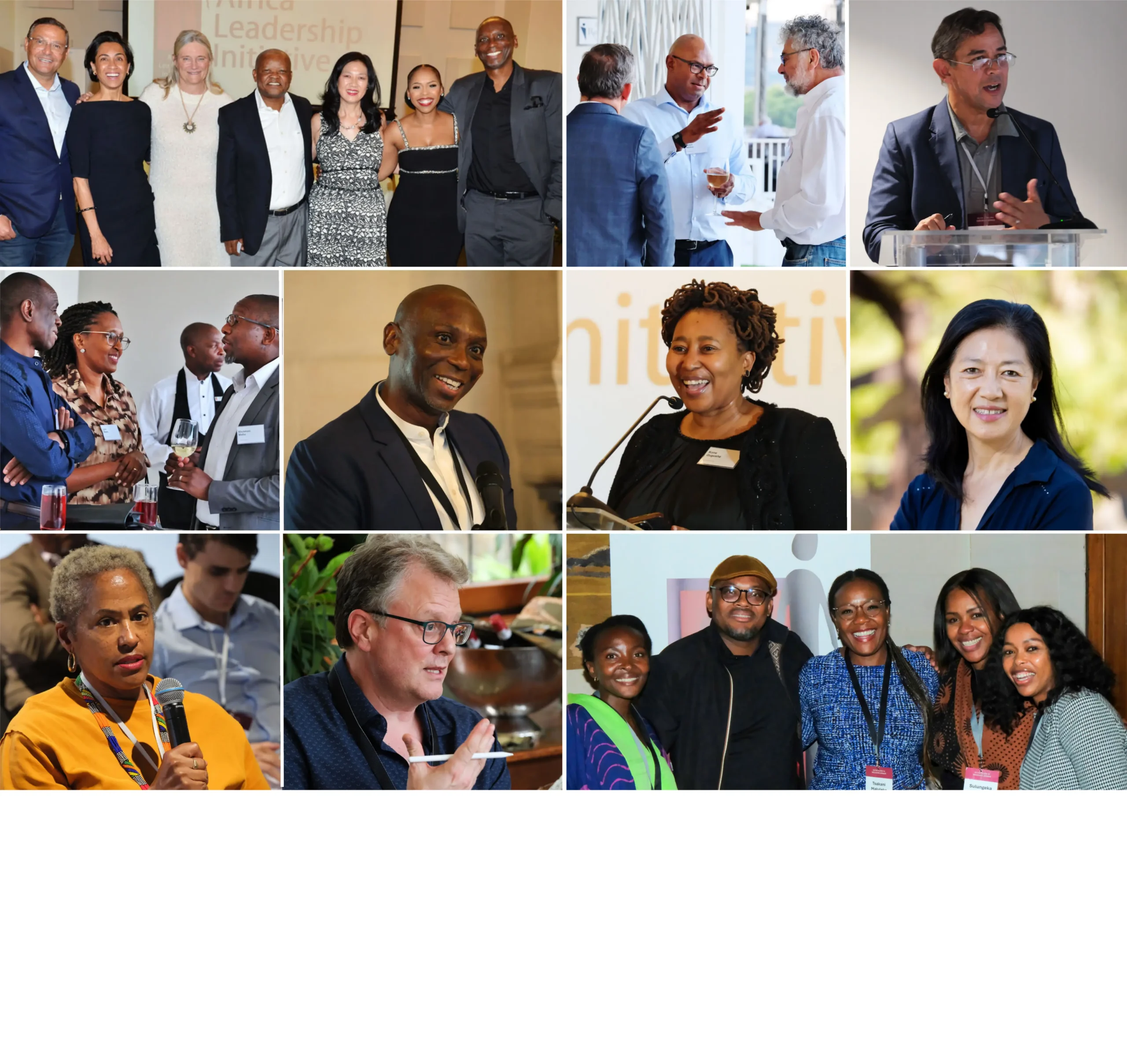

ALI SA Fellow Gilbert Pooley believes the kind of experiential, coached learning that shaped his own leadership journey should not be reserved for a fortunate few. Through Tacit, he is exploring how technology can help make practice, feedback and support available at a far greater scale.
What Changes People?
It is a question Gilbert Pooley (Class XII: Isilimela) has spent much of his career trying to answer.
Never before has so much knowledge been available to so many people. With an internet connection and a smartphone, learners can access courses, tutorials and information from almost anywhere in the world. Yet access to content alone rarely produces the outcomes people hope for.
As he puts it, “Watching a hundred episodes of MasterChef won’t make you a chef.”
That insight has shaped Gilbert’s work in education, skills development and youth employment and ultimately led to the creation of Tacit, a platform designed to help people practise difficult conversations through realistic role-play and personalised coaching.
For Gilbert, the challenge has never been access to information. The challenge has been helping people develop the confidence, judgement and skills that only emerge through experience, feedback and practice.
The Limits of Content
Around 15 years ago, Gilbert co-founded Umuzi, an organisation focused on helping young people from low-income communities build careers in software development, data science and an expanding range of professional fields.
The results were encouraging. When learners received practical experience alongside personal coaching and support, around 80% found employment.
The challenge was scale.
Providing meaningful coaching and personalised feedback cost roughly $6,000 per learner, allowing Umuzi to reach only a fraction of those who could benefit. Efforts to expand through online content and course licences reached more people, but the impact was significantly lower.
For Gilbert, the lesson was clear.
“Content without support isn’t education. What changes people is personalised support — coaching, feedback, someone who notices when you’re stuck.”
The observation resonates strongly with the ALI experience itself. Fellows spend weeks engaged in moderated dialogue with a diverse cohort of peers before putting those lessons into practice through ventures they are required to launch. The value comes not simply from knowledge, but from reflection, challenge, accountability and action.
Gilbert points to ALI as an example that creates lasting change. “The kind of high-touch, experiential development that shaped us as ALI Fellows no longer has to be a privilege of the few,” he says.
From Idea to Venture
The desire to make this kind of learning more accessible had been with Gilbert for years.
About a year ago, he realised that advances in artificial intelligence had created a new possibility. AI had become capable of providing realistic practice environments and personalised coaching at a very low marginal cost.
That realisation became Tacit.
The platform allows learners to step into realistic, voice-based conversations and practise situations they may only encounter occasionally in real life. Users can prepare for job interviews, navigate difficult workplace discussions, manage upset customers or rehearse conversations about salary and performance.
“The conversations people choose to practise are usually the high-stakes ones we almost never get to rehearse,” Gilbert explains.
Most people face these moments for the first time when the outcome matters most. The challenge is often not the conversation itself, but the fact that there has been no opportunity to practise beforehand.
Tacit offers a safe environment where people can build confidence through repetition before those moments arrive.
Building Through Uncertainty
Gilbert is candid about the doubts that have accompanied the venture.
“Honestly, the biggest scepticism I’ve faced has been my own.”
Launching a new business during a period of rapid technological change brings obvious uncertainties. Questions about the future of work, the pace of AI development and the changing priorities of employers are difficult to ignore.
The decision is also personal.
With a young son and family responsibilities, Gilbert describes weighing entrepreneurial ambition against the security that comes with a stable salary.
Yet he believes periods of disruption also create opportunities to address longstanding challenges.
He sees the current moment as a chance to make education and labour markets more inclusive while helping organisations extend their reach and deepen their impact.
At the same time, the tools available to entrepreneurs have changed dramatically. Tasks that once required experienced teams and substantial funding can increasingly be accomplished with AI-assisted tools, allowing founders to focus more of their energy on understanding users, making decisions and setting direction.
“More and more, that judgement is the scarce part,” he reflects.
The Power of Rehearsal
One of the most encouraging discoveries has been how people engage with the platform.
Rather than treating each exercise as a one-off interaction, learners return repeatedly to practise the same conversations.
Across Tacit’s first partner programmes, a few hundred learners have already completed more than three thousand practice conversations.
More than half return to repeat the same scenario and around a third complete it three times or more.
“They use it the way you’d use a rehearsal rather than a test,” Gilbert says.
For him, this behaviour confirms something important: people value opportunities to practise when those opportunities are available.
Historically, repeated coaching and rehearsal were often reserved for those who could afford them. What excites Gilbert is the possibility that this experience can now be made accessible to far more people.
Looking Ahead
Gilbert is cautious about predicting where technology will be in five years’ time.
Instead, he focuses on direction.
His ambition is to help as many people as possible, particularly in Africa and in low-resource settings, build the skills and confidence needed to find work, adapt to changing labour markets and improve their livelihoods.
He imagines someone preparing for an important moment — a first job interview, a difficult workplace conversation or a mid-career transition — picking up their phone and practising in their own language until they feel ready.
For the ALI SA community, he sees opportunities for partnership and collaboration. He is particularly interested in connecting with Fellows and organisations working in leadership development, youth employment, education and reskilling.
Tacit, he says, is not intended to replace existing programmes. Rather, it is designed to strengthen them by adding practice and coaching at a scale that has traditionally been difficult to achieve.
To learn more about Tacit, explore more at https://tacit.coach/.