


When introducing the dialogue, Dr Mzamo Masito did not begin with policy, statistics or ideology. He began with family.
He spoke about two brothers whose lives took very different paths. One battled profound struggles before taking his own life. The other was remembered for kindness, generosity and an instinct to care for those around him. He also spoke about growing up without his biological father and witnessing domestic violence in his home as a child.
These were not simply personal stories. They were the foundation for a question that would shape the entire discussion:
What happens when wounded boys become wounded men?
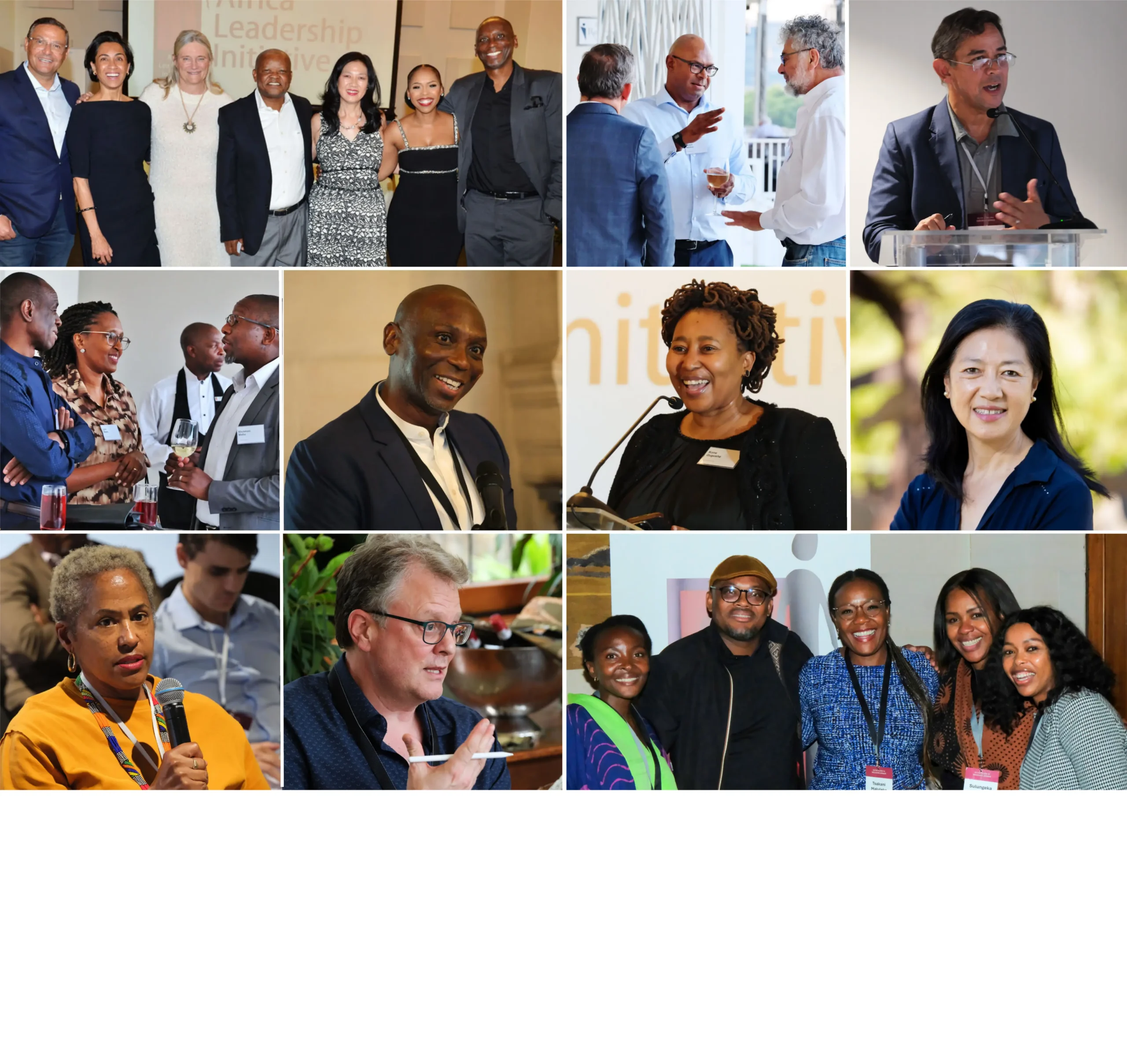
Hosted by ALI SA, the dialogue brought Fellows together to reflect on the experiences of boys and young men in South Africa, the roots of violence and exclusion and the leadership responsibility to build a society where both boys and girls can flourish.
Looking beyond the symptoms
A recurring theme throughout the discussion was the distinction between symptoms and causes.
Drawing on more than two decades of work with boys in communities across South Africa, Dr Masito described patterns he has observed over many years. Boys falling behind at school. Higher dropout rates. A growing sense of disconnection and lack of purpose.
Yet the conversation quickly moved beyond educational outcomes and social indicators.
Several contributors argued that South Africa often focuses on responding to visible crises while paying less attention to the conditions that produce them. Violence, addiction, school failure and social instability do not emerge in isolation. They are frequently connected to experiences that begin much earlier in life.
Participants reflected on poverty, inequality, family breakdown, exclusion and the lasting impact of childhood experiences. The discussion repeatedly returned to the idea that many of the country’s most pressing challenges cannot be understood without examining the environments in which children are raised.
One of the most striking observations centred on language.
Dr Masito described how boys often hear deeply negative descriptions of their fathers, particularly in communities carrying histories of pain and disappointment. While those words may be directed at an absent or failing parent, the impact on a child can be far broader.
As he observed, what a boy often hears is not simply that his father is worthless, but that he shares in that worthlessness.
Woundedness, shame and violence
The discussion became increasingly reflective as participants explored the relationship between personal pain and societal harm.
Several Fellows spoke about shame as a hidden force shaping behaviour, relationships and identity. Shame linked to family experiences. Shame linked to abuse. Shame linked to social status and the pressure to conceal what happens behind closed doors.
One panellist challenged the room to consider what lies beneath the country’s persistent struggles with gender-based violence. While acknowledging the devastating impact of violence against women and girls, contributors also raised questions about violence experienced by boys and young men, particularly forms of abuse that often remain unspoken.
Stories were shared of boys carrying experiences they felt unable to disclose because of stigma, expectations around masculinity or fear of not being believed.
A contributor noted that society often finds it easier to discuss systems, policies and legal responses than to confront the deeper wounds that shape people’s lives.
The room paused more than once as participants reflected on these realities. Rather than rushing towards solutions, the moderator encouraged Fellows to sit with the discomfort and complexity of the questions being raised.
The role of fathers and positive male role models
Perhaps the strongest point of consensus emerged around the importance of fathers and positive male role models.
One panellist described the presence of caring men in the lives of children as one of the most significant factors influencing long-term outcomes. The discussion was not limited to biological fathers. Mentors, teachers, coaches, relatives and other trusted adults were all recognised as playing important roles.
Several Fellows shared personal experiences that highlighted the complexity of the issue. Some grew up without fathers. Others had fathers who were physically present but emotionally distant. One contributor reflected that a mother had fulfilled many of the functions traditionally associated with fatherhood.
The discussion made clear that presence alone is not enough. What matters is the quality of the relationship and the guidance, affirmation and support children receive.
Again and again, participants returned to stories of individuals who broke difficult cycles because someone stepped into their lives at a critical moment and offered a different example of what was possible.
As one Fellow reflected, two children can grow up in the same household and emerge with very different outcomes. The difference is often found not only in what happened to them, but in who helped them make sense of those experiences.
A challenge for leadership
As the conversation progressed, the focus shifted towards responsibility.
Participants questioned whether enough investment is directed towards prevention, healing and relationship-building. Others reflected on how social norms, family structures and community environments shape behaviour long before problems become visible.
The discussion also resisted framing the issue as a choice between supporting boys or supporting girls.
One contributor recalled community conversations where boys spoke about the need to be nurtured, while girls spoke about the need to be empowered. The insight resonated across the room because it captured the essence of the dialogue: these are not competing priorities.
For Fellows committed to building a Good Society, the challenge is not deciding whose needs matter most. It is creating conditions where both can thrive.
Reflections for Fellows
The dialogue left participants with several questions worth carrying forward:
- What responsibilities do leaders have in ensuring that boys and young men experience belonging, purpose and opportunity?
- How do we address violence while also confronting the wounds that often sit beneath it?
- What role can fathers, mentors and positive role models play in breaking harmful cycles?
How can South Africa move beyond either-or thinking and hold multiple realities at once?
The conversation did not end with easy answers. Instead, it surfaced questions that many felt South Africa can no longer afford to ignore.
If there was a shared conclusion, it was that leadership requires more than responding to visible crises. It requires the courage to examine the experiences that shape people long before those crises emerge. Only then can the work of building a more just, healthy and connected society begin.
Click HERE to view the photos from the evening.