


Some of South Africa’s most impactful education reform over the past decade was ignited by a unique collaboration between ALI SA Fellows. Three leaders, united by a shared commitment to evidence, accountability and impact, triggered a change that is reshaping the future for South African learners.
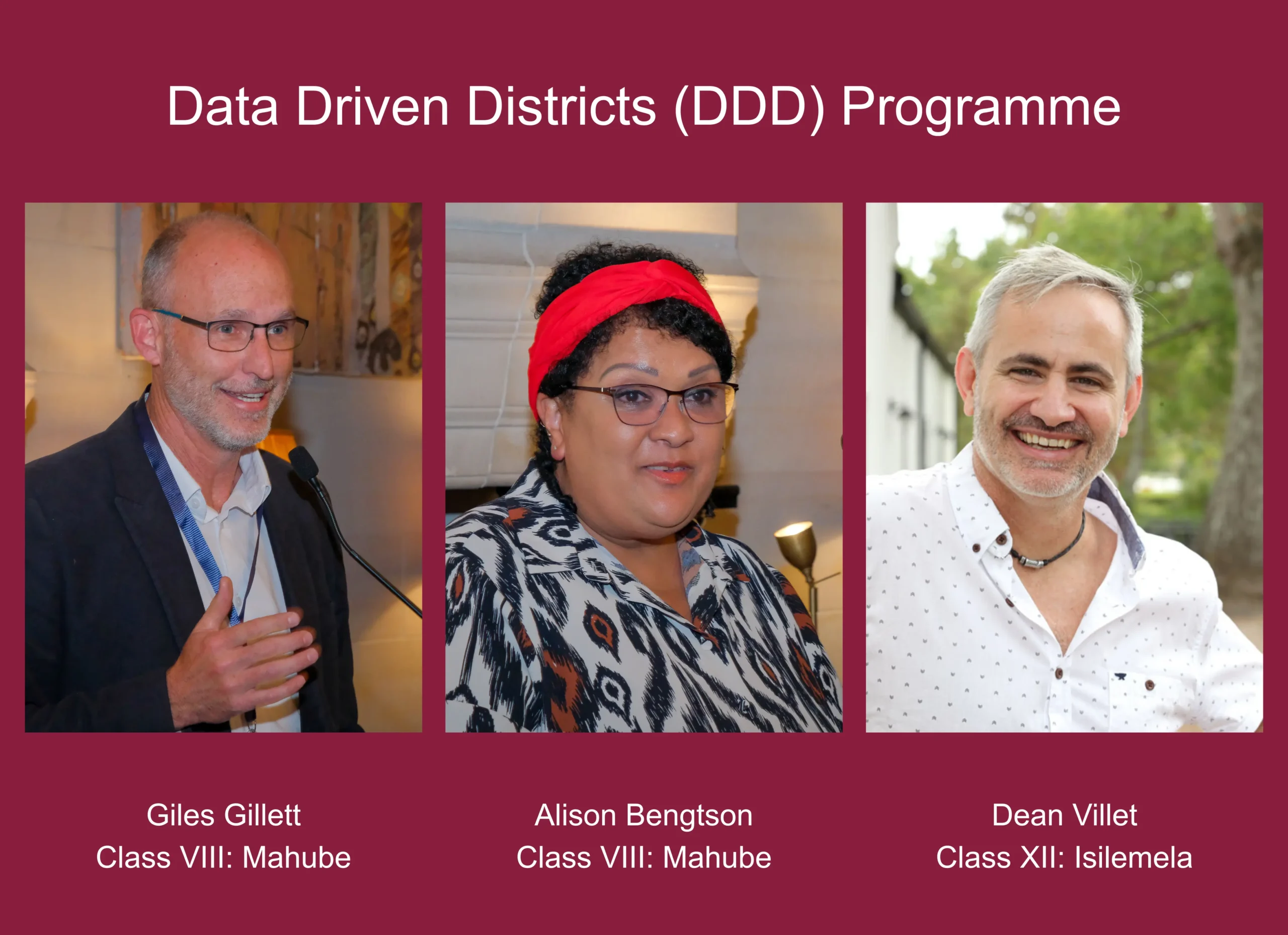
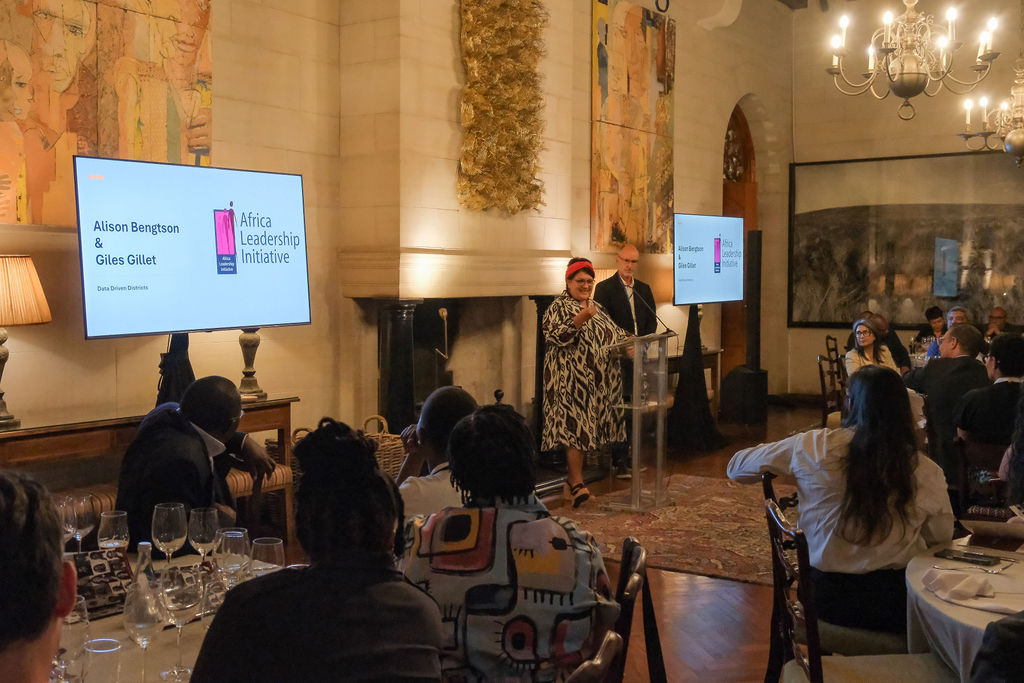
The Data Driven Districts (DDD) programme was established in 2012 through a public-private partnership with the Department of Basic Education. The programme was co-led by Giles Gillett (Class VIII: Mahube), Founder of New Leaders Foundation, and ALI SA Fellow Dean Villet (Class XII: Isilemela), Head of Africa Programs at the Michael & Susan Dell Foundation, which funds the DDD programme. Together, they worked closely with Alison Bengtson (Class VIII: Mahube), Deputy Director-General in the Gauteng Department of Education, whose districts ran the first DDD pilot. This collaboration enabled the programme’s initial implementation and supported its growth to national scale.
This venture – spanning implementation, government partnership, and philanthropy – has become the largest data initiative in South Africa’s public education system. Over the past 13 years, it has quietly reshaped how education officials across the country use information to make decisions that directly affect learner outcomes.
The transformation is visible in schools across the country, as demonstrated by stories of real impact seen in a recent independent case study of the DDD programme. At LM Mokoena High School in rural Mpumalanga, a principal used DDD’s learner performance data to identify Grade 8 mathematics students scoring below 40%. Working with teachers, the principal planned afternoon sessions to re-teach topics from the terms where learners had struggled the most. In a single term, the school lifted the average from 35% to 52%.
Another example is Mogalakwena District in Limpopo province. With more than 100 000 learners in sparsely located schools, the district is short on education resources and big on challenges. But with the help of DDD, it went from being one of the lowest-performing districts at the end of 2019, to being the best in the province in less than three years. The number of learners writing exams grew by 40%, and the number of learners passing grew by 64%, with its overall final-year pass rate still exceeding the national average today.
Key numbers at a glance
– 12 million learners represented on the system.
– ±22 000 schools submitting termly data.
– 35 000+ officials with access to the dashboard.
– 90% of surveyed DDD users take action based on their dashboard visits.
– 74% of surveyed DDD users agree that the dashboard has change how they make decisions at work.
For ALI SA, this is a living example of how ALI Fellows, united by vision and purpose, have collaborated to deliver meaningful impact at scale. It is values-based leadership in practice: leveraging individual strengths to support a system that shapes the country’s future.
Click here to watch a short video of how access to timely data impacts South African learners.
If you would like to learn more about the Data Driven Districts programme and explore the dashboard, visit: www.dbedashboard.co.za