

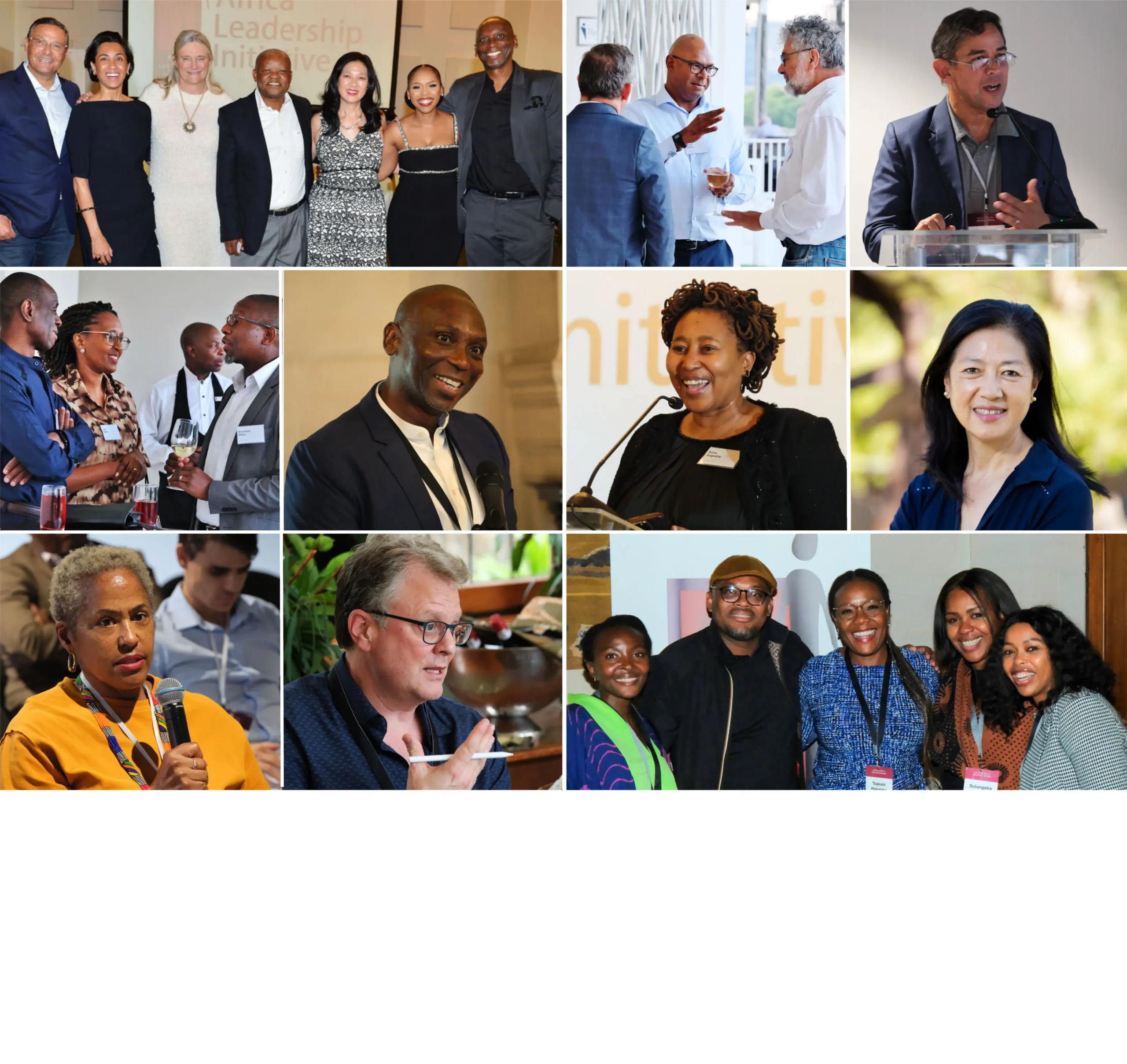
The ALI Africa Impact Forum in Cape Town was my first real engagement with the Africa Leadership Iinitiative network after ten years of working almost entirely inside Somalia. I didn’t understand how isolating that decade had been until I walked into a room full of peers from across the continent and realized – I had never really had this kind of room. What AIF created was more than a conference schedule. It was a piece of missing infrastructure: a place where African leaders could be seen by one another, without performance, without translation.
The design mattered—the one-on-one conversations between sessions, the deliberate space for Fellows to talk honestly about what their work costs them, the expectation that we would speak to each other as peers, not as brands. In those conversations, a pattern kept emerging. Many of us had been carrying the same private assumption – I’m the only one feeling this level of weight. Hearing other leaders describe their own isolation, their own doubts about whether the work is sustainable, made it painfully clear how untrue that is. That recognition—of shared burden, not just shared vision—was the real gift of the forum.
“What AIF created was more than a conference schedule. It was a piece of missing infrastructure: a place where African leaders could be seen by one another, without performance, without translation.”
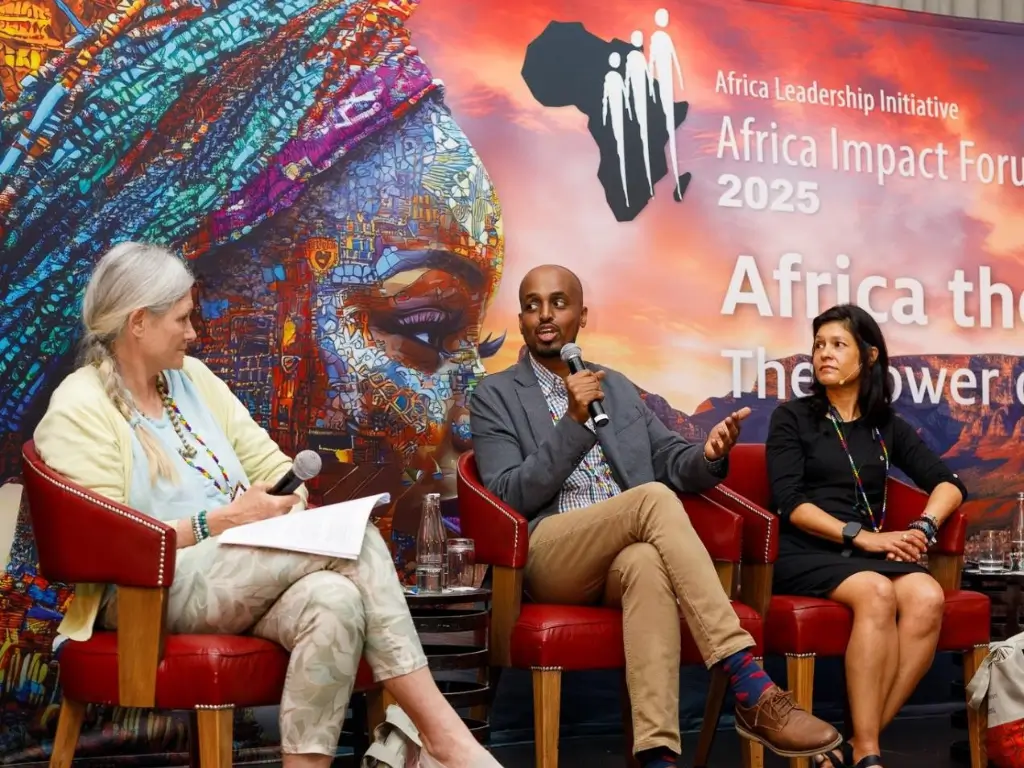
The McNulty-sponsored panel was my moment to put Somalia on that map. I shared what our team has built over the past decade: a trauma-informed model for working with Somali entrepreneurs that has led to an 83% reduction in depression symptoms and 98% job retention among participants. Those numbers matter to funders and policymakers. But what seemed to land in the room was the story underneath them – the refugee experience, the decision to return, and the slow, often painful process of building mental health infrastructure in a country better known for its crises than its entrepreneurs.
After the session, Fellows kept pulling me aside to share their own experiences—with conflict, with loss, with the quiet psychological toll of leadership. One phrase I used on the panel kept coming back to me for the rest of the week: that I’m “in the business of healing the ability to imagine.” I hadn’t scripted that line, but it named something people in the room recognized in their own work too.
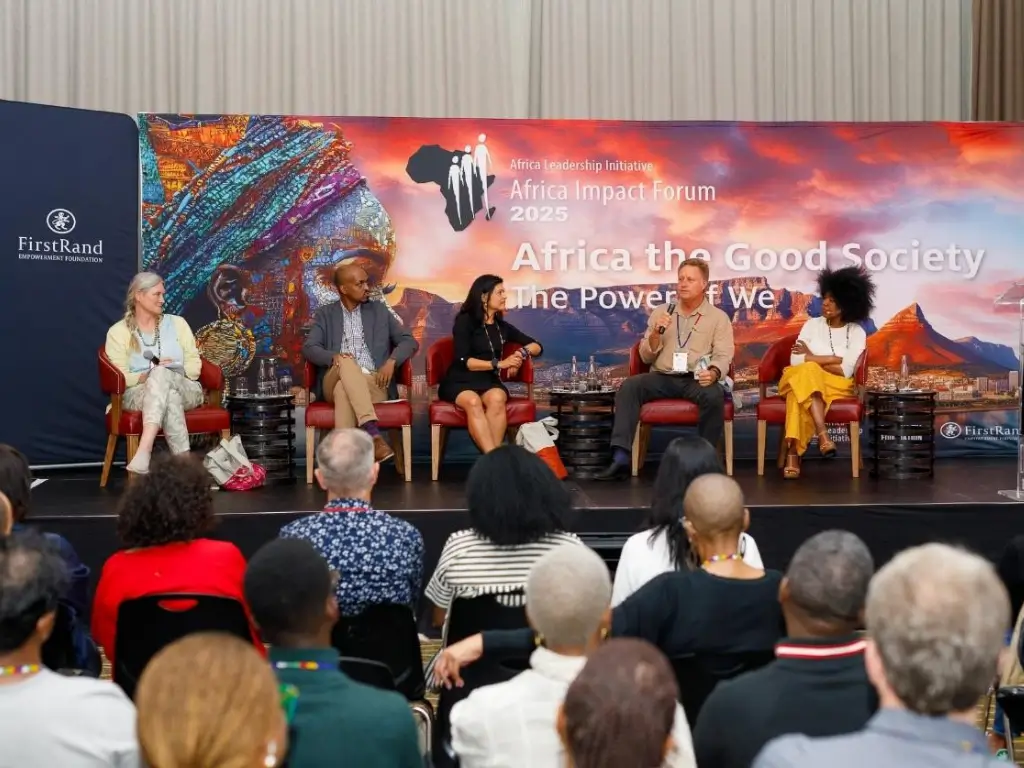
What became clear is that the isolation so many African leaders carry isn’t incidental—it’s inherited. We’re building futures for our communities while carrying the unprocessed weight of the conflicts, displacements, and losses that shaped us. That’s not sustainable, and more importantly, it limits what we can imagine together. Pan-African solidarity can’t just be about shared aspirations or coordinated strategy. It has to account for shared wounds. The invitations I received after the panel—to return to South Africa, to train teams, to help other organizations build trauma-informed approaches—showed me that what we’ve proven in Somalia matters beyond Somalia.
“Pan-African solidarity can’t just be about shared aspirations or coordinated strategy. It has to account for shared wounds.”
If individual leaders can’t heal enough to imagine clearly, we can’t build the collective futures this continent needs. The ALI network is one of the few spaces doing the harder work: not just connecting African leaders, but creating the conditions for us to be whole enough to lead. That’s the infrastructure that changes everything.